Monday, August 29, 2016

Disappointing performance in Rio Olympics


While we should not have been too critical and demeaning like Sobha De at the start of the Olympics, there is no reason why we should not be critical about the performances of our athletes after the tournament is over. While we need to encourage our sportspersons, we must point out their flaws too, lest they stop improving.

The level of competition in the Olympics is the highest among all tournaments, because here an athlete competes not only for his personal glory, but also for the honour of his country. Winning in Olympic is not as easy as winning a cricket match, where a bunch of corrupt individuals can be easily purchased. So, commitment and love for the country are the two minimum qualities that an athlete must possess to do well in the Olympics. Can you say that all the athletes in the Indian contingent in the Rio games showed these two qualities? There are definitely more than one, but I will name only one individual, who most people thought would win a medal. I am talking about Saina Nehwal. Despite being the number 5 in the rankings, the way she capitulated to the 61-seed Maria Ulitina of Ukraine was indeed shameful. At the end of the match, we were told that an inflammation in her right knee was to be blamed for the meek surrender. Whosoever has played any game could easily notice that she didn't give even her 50%, despite the injury being mild in nature. Saina should be thankful to PV Sindhu for taking away the attention from her.

The near escape from death of the marathon runner OP Jaisha clearly demonstrated our lack of professional approach. We don't take our sports seriously. The officials seemed to have been on a fun tour.

In the 74 kg weight free-style wrestling we had a good chance of winning a medal. But the internecine off-the-field battle between Sushil Kumar and Narsingh Yadav ensured that none of the wrestlers could participate in that category. The allegation made by Narsingh is of a very serious kind. It should be thoroughly investigated, and the culprits must be brought to book. I don't know why some experts pinned their hopes on the 33-year-old Yogeswar Dutt, who not only looked out of touch, but also looked fatigued.

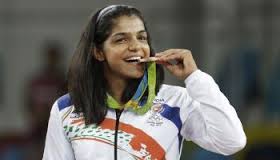
The terrific form Sindhu was in, had it been anyone other than the flamenco queen Carolina Marin, she would have walked away with a gold medal. But the top seed Marin was a cut above Sindhu. There is no shame in losing to a champion player. Sindhu made us proud. So did Sakshi. Dipa's performance was very inspiring. Next time, if she can improve her landing, I see a very bright prospect for her.

We should not forget Abhinab Bindra's valour, who missed a bronze medal by a whisker.

8 years ago, I wrote a blog suggesting few measures to improve India's performance in sports. Here is the link

http://kahlar.blogspot.in/2008/03/revive-sports-policy.html

Pictures taken from net

Thursday, October 22, 2015

Sehwag the best Indian cricketer


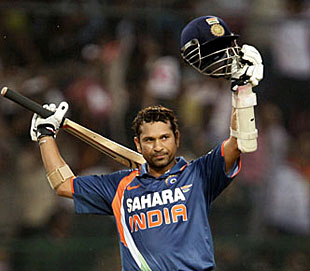
He sent shivers in the spines of even mighty bowlers of the likes of Shoaib Akhtar, Muralidharan,  Bret Lee etc. He always rose to the occasion against our arch-enemy Pakistan. His scintillating drives made the balls reach boundary lines before you could bat your eyelids. He brought life into the otherwise boring  test matches. Yes, I am talking about none other than the Nawab of Najafgarh, the Sultan of Multan, one and only the swashbuckling Sehwag. He has recently announced his retirement from the international cricket and the IPL. So, it's time to evaluate him.

The statistics says everything. Only Indian to have 2 triple hundreds, 3 highest scores in the history of Indian test history, fastest three hundred ever, test strike rate  of 82.2 top among players with 2000 plus runs: what else do you require to brand him as the best Indian test batsman ever? Test average of 49.34 with that kind of strike rate is simply amazing!

He was not the guy who played for personal records. He was a match winner, a great entertainer, who did not hesitate to go for a six even at the score of 94 in a test match. That's why his number of test hundreds did not go beyond 23. In the modern day test matches it is not only necessary to score runs, but also to score them quickly. Virender Sehwag exactly did that.

In the odi format, his average of 35.05 looks excellent when you combine that with the strike rate of 104.33 (second highest after Shahid Afridi among the odi batsmen who scored more than 2000 runs). India won 14 of the 15 odis where he scored centuries. Isn't that astonishing?

Some critics point fingers at his unorthodox techniques. It's true that the best weapon in his armourery was his hand-eye  coordination. Great footwork was not his forte. However, I will prefer Sehwag rather than those technically solid players who will play for personal records.


It's indeed unfortunate that he didn't get any chance to play for India after March 2013. This simple guy didn't know the tricks to remain relevant. So, he was denied chance to entertain the crowd in the last 2 years in international cricket. It's really unfortunate that he had to retire in such unceremonious manner which didn't match with his glorious career.

In my opinion he is the best Indian cricketer so far. If I am to rate top 5 Indian cricketers I have seen, my rating would be 1. Sehwag 2. Kapil Deb 3. Sachin Tendulkar 4. Sourav Ganguly 5. Anil Kumble

Pictures are taken from net. He sent shivers in the spines of even mighty bowlers of the likes of Shoaib Akhtar, Muralidharan,  Bret Lee etc. He always rose to the occasion against our arch-enemy Pakistan. His scintillating drives made the balls reach boundary lines before you could bat your eyelids. He brought life into the otherwise boring  test matches. Yes, I am talking about none other than the Nawab of Najafgarh, the Sultan of Multan, one and only the swashbuckling Sehwag. He has recently announced his retirement from the international cricket and the IPL. So, it's time to evaluate him.

The statistics says everything. Only Indian to have 2 triple hundreds, 3 highest scores in the history of Indian test history, fastest three hundred ever, test strike rate  of 82.2 top among players with 2000 plus runs: what else do you require to brand him as the best Indian test batsman ever? Test average of 49.34 with that kind of strike rate is simply amazing!

He was not the guy who played for personal records. He was a match winner, a great entertainer, who did not hesitate to go for a six even at the score of 94 in a test match. That's why his number of test hundreds did not go beyond 23. In the modern day test matches it is not only necessary to score runs, but also to score them quickly. Virender Sehwag exactly did that.

In the odi format, his average of 35.05 looks excellent when you combine that with the strike rate of 104.33 (second highest after Shahid Afridi among the odi batsmen who scored more than 2000 runs). India won 14 of the 15 odis where he scored centuries. Isn't that astonishing?

Some critics point fingers at his unorthodox techniques. It's true that the best weapon in his armourery was his hand-eye  coordination. Great footwork was not his forte. However, I will prefer Sehwag rather than those technically solid players who will play for personal records.


It's indeed unfortunate that he didn't get any chance to play for India after March 2013. This simple guy didn't know the tricks to remain relevant. So, he was denied chance to entertain the crowd in the last 2 years in international cricket. It's really unfortunate that he had to retire in such unceremonious manner which didn't match with his glorious career.

In my opinion he is the best Indian cricketer so far. If I am to rate top 5 Indian cricketers I have seen, my rating would be 1. Sehwag 2. Kapil Deb 3. Sachin Tendulkar 4. Sourav Ganguly 5. Anil Kumble

Pictures are taken from net.

Sunday, April 1, 2012

Ten Reasons for Tendulkar to Retire


Now that the paeans praising the demigod of cricket for achieving the so-called 100th 100 have been sung and the effervescence of celebration almost subsiding, it is good time to pay attention to the retirement issue. It is well-known that the Little Master has rubbished everyone suggesting his retirement after reaching the milestone. He conveyed the message, “Yeh dil mange more”. He thinks he has a lot more to offer. Though I have high regard for him, I don’t agree with him in this respect. In my opinion, he should retire because of the following reasons:
1.        
Last one year’s poor performance: From 28.3.2011 to 28.3.2012 (the date of writing this blog), Sachin scored only 418 runs from 12 odis, averaging only 34.83 (this poor show has brought down his average from 45.13 to 44.83). Averaging 34.83 in the prized opening slot with a strike rate of 81 is, by no means, the work of a god. During this period he scored only one hundred against Bangladesh with a dismal strike rate of 77.55, resulting in India’s defeat. Judging from his pathetic strike rate from 90 to 100, there is reason to believe that India’s win was not his primary consideration.

During the same period, he played 11 tests, scoring 778 runs with an ordinary average of 37.04 (this performance has brought down his career average from 56.94 to 55.44). During the same period, Rahul Dravid played 14 tests scoring 1225 runs with an average of 51.04. While Sachin failed to score a century, Dravid scored 5 centuries in the last one year. The irony is that Sachin thinks he is on top.

2.       Responsibility as the senior most player for team’s horrible overseas performance: India’s last two overseas series of England and Australia cannot be called anything but nightmares. Blaming a particular person for this dismal show will not be proper, as cricket is a team game. But as the most senior pro in the team, he should take the maximum blame. His one or two good innings could have turned things in India’s favor. But he failed repeatedly to make a century. Previously, he had been playing odis selectively against stronger teams. But repeated failures and greed for making the 100th ton had gone into his head, making him to block a place for the deserving juniors in the Asia cup odi side. At that juncture, some section in the media predicted that he would retire after scoring the 100th ton. Clearly, they failed to understand the psychology of the Little Master. I am quite sure he has the 50th 100 in odis in his mind.

3.       Lack of motivation: Sachin claims he is madly in love with cricket. Even his worst critic will not disagree with this statement.  Love for cricket is essential for any successful cricketer. But the bigger factor is motivation. Recently, in an interview, Sachin said that he has no more targets to play for. Clearly, targets were his motivation, and there are no more targets to chase. Also, after participating in 188 tests and 462 odis for long 23 years, he can be compared with a squeezed lemon with very little juice left inside. So, instead of pressing the lemon harder, it should be placed in the basket of peaceful retired life.

4.       Age factor and injuries: Tennis elbow took a heavy toll on Tendulkar. When he recovered from it, he was just a shadow of his former self. The injury turned him from a beautiful stroke player to an awkward accumulator of runs. This is precisely the reason for his failed centuries (since 2004, Sachin has scored 13 odi hundreds out of which on only 5 occasions India has won). He was one of the main culprits for India’s shameful exit from the odi World Cup 2007 in West Indies (he had scores of 7 against Bangladesh, 57 not out against Bermuda and 0 against Sri Lanka). At that time some commentators called for his retirement. But the public opinion was not that vociferous. Now, he is 39 years old (born on 24 April 1973), even though he thinks he is 37.  He has been getting bowled frequently (even by the rookies), indicating a decline in reflex and eyesight. Therefore, it is high time for him to go.

5.       Blocking young talents: After repeated failures of the old warhorses during the recent overseas tours, Gavaskar argued that had the juniors played in place of them, they would have gathered vital experiences for the future. Also, they could not have performed worse than these guys. It can be argued that the juniors have to earn their place in the team. Pujara, Tiwary, Rahane etc. have been doing very well in the domestic arena. Tiwary was denied any match even after scoring a century in his last one day international match. The problem with Sachin is that he has reached such a legendary status that the selectors do not find enough courage to tell him that it’s time to hang up his boots. So, until the he decides it’s enough for him, a deserving youngster has to cool his heels.

6.       Strong public opinion for his retirement: A glimpse of the public opinion can be found from the comments written in Internet. Not only in the net, but also in public places, people are talking about his retirement. Even his ardent fans have become disgruntled with his lackluster performances, and they want him to retire. Former greats like Kapil Deb and others have also suggested him to retire. But Sachin is so enamored with his records that he simply cannot gauge the public mood.

7.       Chances of declining record: I have shown in the first reason paragraph that how his performance has been declining and how it affects his record. As Indians, we feel proud about his record. If the decline in the averages continues its down slide, we will definitely feel sad.

8.       More important role to play for cricket: It is time for him to contribute to the development of Indian cricket in other capacities. He can become the coach of the under 19 team or he can play any important role in the NCA, or he can do anything for the betterment of cricket.

9.       Shameful current ICC ranking: Can you believe that the “God of cricket” is placed at 27th position in the current ICC ranking for the odis? This is shameful, and should be enough reason for him to call it a day.

10.   Pay attention to the other aspects of life: Like Rahul Dravid’s case, it’s time for Tendulkar, too, to pay attention to his family. He could not pursue higher education because of cricket. Does he want his son and daughter to be also like him? Isn’t it time to personally look after the family?

Sources of information: Wikipedia and ESPN cricinfo
Picture from the Internet


Tuesday, March 20, 2012

Century of centuries


On 16th march, 2012, Sachin Ramesh Tendulkar made Indians proud by registering his 100th International century at Mirpur in Bangladesh. In celebration of this incredible feat, the frenzied Indian media started anointing the Little Master with all kinds of eulogies, zillions of congratulatory messages poured in from all quarters, the fans became ecstatic in joy, the demand for awarding Sachin with Bharat Ratna got fresh impetus, and one overenthusiastic columnist even compared his feat with Pele’s achievements. Having saluted the Maestro for this monumental accomplishment, I am going to raise a few critical points that may sound cacophonous to those who consider cricket as a religion and Sachin as a God.


1.       Strange logic behind this century of centuries:  “Century of centuries may be a catchy phrase, but I find it slightly simplistic and irrational. We know simple addition can be performed on quantities having the same unit. But, here we are adding quantities which have different units, namely, test centuries and odi (one day international) centuries. It may not be as bad as adding one mare plus one donkey is equal to one mule. But it is almost like adding 51 meters with 49 centimeter and coming with the erroneous answer of 100 meters. We have to understand that one odi century, by no means, is equivalent to one test century. The difficulty in scoring a ton in a odi match is much lessened by a) strict wide ball rule which restricts swing bowling, b) maximum quota of 10 overs for strike bowlers, c) fielding restrictions in the power play periods, d) restriction of bouncer law, e) designer pitches made to suit the batsmen etcetera. Therefore equaling a odi century with a test century will be highly fallacious. However, with this argument, Sachin’s credit cannot be taken away as he is highest century maker for both versions of the game.


2.       Relation between Sachin’s century and India’s win: For the last few years a rumor has been gaining momentum that whenever Sachin makes a century India loses the match. Obviously this is not true. However, it is very important to examine the degree of truth in the rumor if we are to compare him with other greats of the sport. However, I am not going to make a comparison with the legendary footballer Pele, as football and cricket should not be compared: football is played by almost whole world and the level of competition is very high here, whereas cricket is played by only a handful of nations and only 7 or 8 nations can be termed as strong. However, Sachin can always be compared with two of his contemporary greats: Brian Lara and Ricky Ponting. In the odis, the percentages of winning centuries for Sachin (33 wins out of 49), Lara (16 wins out of 19) and Ponting (25 wins out of 30) are 67.35, 84.21 and 83.33 respectively. However, since 2004, Sachin has scored 13 odi hundreds out of which on only 5 occasions India has won. Probably, this poor 38.46% has originated the aforesaid rumor. However, in the overall tally, Sachin’s score of 53 percent surpasses Lara’s 43%, but falls far behind Punter’s 77%. As per my opinion, winning is more important that personal achievements. In this regard, I rate Ponting and Lara (considering the weak side he was playing for) more useful than Sachin.

Sunday, April 6, 2008

Learn from Dhiraj Parsana how to stab the nation


So, India suffered a humiliating defeat at the hands of South Africa by an innings and 90 runs. This is the biggest loss on the home turf in the last 49 years (Australia led by Richie Benaud, beat India by an innings, and 127 runs in 1959). But there is hardly any surprise in the upshot. If you could not predict this result, then you are not a good follower of Indian cricket. When you hand a green top with lot of moisture on a silver platter to your enemy, who has a lethal fast bowling attack, this is the only outcome that could have resulted. I predicted the result with the precision of pointing an innings defeat from the very beginning of the match to my friends. Admitting the facts that our over-hyped batting line up could not live up to its reputation, our team management made a blunder by electing to bat first, and our bowlers lacked sharpness and zeal, I have to blame the pitch curator as the main culprit behind this shameful defeat. The following are the main reasons:

1.Treachery of the curator: Treachery is nothing new in India. In 1192, Indians could not resist the invading Turks, led by Muhammad Ghuri, because of treachery of one of the very powerful ruler of an Indian state, Jaichand of Kannauj. In 1757, the British could conquer Bengal in the battle of Plassey because of the treachery of Mirzafar, the most senior General of the then Nawab Siraz-ud-Daulla. There are plenty more such examples. Before the freedom struggle began against the British from the late 19th century, the concept of a united Indian nation was missing. But slowly the concept of nationalism began to found a strong base. We are aware of the role played by Sardar Patel in uniting the princely states after India obtained Independence. Since then we never looked back, and grew stronger and stronger as a powerful nation. Anyway, let us come back to the issue and examine whether the curator is indeed a traitor or not. In my opinion, the curator, who has been given full support by the Gujarat Cricket Association, is a traitor, because he presented the visiting team a green pitch as an early X-mass gift, which ultimately resulted in an innings defeat for the home team. There can be mainly two possibilities for keeping a green top, ignoring the requests from the selectors and the team management: either the curator might have thought that it would not harm India, or he might have done it intentionally to humiliate India. Not only the curator, but also anyone who had thought that India could cope with South Africa on such a green top must be an idiot of the highest order. Some foreign commentators were intentionally overestimating Indian's ability to play on a green top, so that the fool administrators fall into their trap. It is almost certain that the curator did it intentionally knowing fully well about the consequences. Now the point is why did he do it? There maybe several reasons for that. Firstly, the curator might have been under the influence of some external betting agencies, which wanted to fix the result of the match in an indirect way, without involving the cricketers. Those who knew what the conditions were going to be must have made huge amount of money. Secondly, there could have been some politics involved here. In the Dalmiya era, we saw how his opponents provided a green top in Nagpur against Australia in 2004-05, or how a green pitch was gifted to South Africa at the Eden Gardens by the sympathisers of Ganguly in the ODI series in 2005. So, it is nothing new in Indian cricket to settle personal scores at the cost of the nation's loss. Here in this case this particular possibility is very thin, though. Thirdly, the curator might have wanted to earn some praise from the foreign press. Some Indians, even after 61 years after independence, could not shake off the colonial hangover, and still today they are beggars of some kind words from the "gora sahibs". Fourthly, some people might have wanted to discredit Anil Kumble so that he could be removed from captaincy early. Fifthly, the curator might have had some personal grudges (see his profile at http://www.cricketfundas.com/dhirajparsana.html), which he settled in this manner. There maybe some other reasons too, but my gut feeling says, it is the first reason that was instrumental behind making such a deadly pitch against Indians.

2.Wrong decision of the team management: The decision to bat first on a green top, having moisture underneath it, and against the world's best bowling line up, is not at all a good decision, especially from the experienced person like Anil Kumble who had seen the team's performance on such lethal tracks over the years. In this regard, who can forget India's miserable surrender against Simon Doull's swing bowling in New Zealand in 1998-99? In that match too, the first two hours proved decisive. On such a grassy track, Indian batters have always struggled. There are plenty more examples. Here it will be interesting to note that in Australia, there was not a single grassy pitch in the last series. The decision cannot be backed up by saying that India wanted to exploit the spinning conditions in the 4th innings. Because in that case India would have had a third spinner instead of Irfan Pathan. Indian pacers could have also wrecked havoc, if they were given the opportunity to ball first. South African captain G. Smith, supporting Kumble's decision, at the post match conference, said that he would have batted, too. I think he is diplomatic here, because with the resource of such an ineffective spinner Harris, while having 3 great quickies, no body would have liked to waste an opportunity to go at the fragile batting line up of the opponent in such a pacer friendly condition.

For Kumble, neither playing with 4 bowlers in a placid track, nor playing with an extra bowler in a fast green wicket is a good idea.

3. Failure of the batters: It was indeed disappointing to find our batters having no answer to the excellent bowling of Stein, Ntini and Morkel. For the Indian batters, there were some technical drawbacks, e.g., the footwork was missing, but most importantly, it appeared to me from the highlights that they got nervous and afraid in front of great pace attack. Indians batters forgot Gabbar Singh's famous quote, " Jo daar gaya, samjho uoh maar gaya (The moment fear enters you, you are gone)" in the Hindi film Shole. Sachin's absence also denied the middle order the much needed resistance and stability. Though recently Rahul Dravid scored a century, I think he is no longer the dependable wall as he used to be. As far as Wasim Jafar is concerned, I don’t know on which extra-cricketing ground he is in the team, while Goutam Gambhir, who was in splendid form in Australia, is languishing in the dressing room!

4.Disappointing performance of the bowlers: Unfortunately, our pace attack could not live up to the expectation. Though Irfan did well with the bat, his performance with the ball was not at all satisfactory. The attitude was good for Sreesanth, but he lacked discipline in his line and length. RP's performance was lacklustre. Having said that, I must emphasise that I never expected them to match the South African bowlers, as they are far superior. At the moment, I suppose Stein is the best bowler in the world, supported by another two brilliant bowlers Ntini and Morkel. I cannot understand why our stupid cricket administrators do not understand this. If we are to beat them, we have to beat them by spin.

Recently, in an article the South African coach Mickey Arthur warned the Indian that their fast bowlers could prove equally deadly in an under-prepared spinning track, too. Though preparing an under-prepared track does not arise as per the guidelines of the ICC, I agree with him that there is always something for the pacers, even in the most spinner-friendly tracks. We saw how J. Srinath devastated South Africa in the same venue in the second innings in 1996. So, I suppose the South Africans will not fret, if they are given a spinning track. Finally, as far as pitch issue is concerned, I would suggest to prepare such green tops for the domestic competitions, or against weaker teams, in terms of fast bowling, such as Bangladesh, Sri Lanka, England etc, but not against a formidable team like South Africa or for that matter Australia.

Sunday, March 30, 2008

Kumble don't be pusillanimous


It is indeed disappointing that the first test between India and South Africa is going to end in a tame draw, unless some miracles happen -- which is highly unlikely -- on the final day. It is disappointing because when you get the Proteas, or for that matter any team from outside the sub-continent, on your home soil, you should try to humble them brutally. Because on their soil you are on the defence and more often or not humbled, but here you have the home advantage: you must know the implications of the word. But unfortunately, over the last few years, India has not been able to do that mainly because of our team's overcautious approach. In this context, without going into the details of every series, I would like to mention only one series where we frittered away our opportunities to take a much needed revenge. In 2002-03 series in New Zealand, we were very badly beaten on the under-prepared, grassy tracks. But just few months after, when our turn came on our home ground, the pusillanimous, record-conscious Indian batters failed to settle the scores, and the series ended in a boring 0-0 draw. The pitches of that series were also to be blamed, as they were bowlers' graveyards. Now this series against South Africa is also very important from the aspect of taking revenge, as we lost 1-2 against them in 2006-07 in the away series. But what have we done? We have lost a great opportunity to go ahead in the series from the beginning. Now let us try to find some of the main reasons. But before that let me confess that I could not see the match so far. My analysis is based on the newspaper, Internet and television reporting and feedback from my personal secretary.

1. Playing with only 2 spinners: This strategy of a team whose captain himself is a legendary (at least from the aspect of taking wickets, and that is what matters: it is immaterial how much one spins the ball) leg-spinner is highly surprising to me. India's heydays (though India's undefeated stint on home soil had started from 87-88 series against W.I) in test cricket on home soil had begun in the year 1992-93 when India knocked out England by a clean sweep of 3-0. Since then India had beaten almost every visiting team (it drew with W. I in 1994-95) until 1999 when South Africa defeated it (under Sachin Tendulkar's captaincy). [Source: http://stats.cricinfo.com/india/engine/records/team/series_results.html?class=1;id=6;type=team ]
India's days of glory had begun under the captaincy of Azharuddin. The key reason behind almost all the successes on home soil was the vital part played by 3 spinners. Initially, they were Kumble, Raju and Chauhan. Later on many others joined the list. The spinners created a magic wave, which befuddled the visiting side batters, who had been technically weak against good spin bowling. A left-arm spinner would have definitely added variety to the attack. But, as Kartik is injured, I found no reason to drop Piyush Chawla, who could have been quite useful with his traditional legbreaks. On batting-friendly tracks with true bounce, sometimes Kumble is sorted out by opposition batters, because of his lack of variation and spin. If you don't play a promising kid like Chawla in India, where will you play him?

2. Defensive approach: Continuing from the last point, a pertinent question may be who to drop? Who should Chawla replace? The answer is very simple: either drop a pacer, or drop one batsman. An aggressive captain, on home soil, on batting friendly (or spinner-friendly, because the opposition does not have any quality spinner) wickets, will definitely drop one batsman. If you drop one pacer then there is not much of a problem either, because Ganguly, a man with a golden arm, can always open the bowling attack. He had successfully done so against Australia, Pakistan on home soil in the past. If you drop one batsman, then again there is not much of a problem, because on Indian soil it is useless to play 7 batters in a test match. The dropped player must be Wasim Jafar, because of his lacklustre performances in the last few series. If one drops Jafar, there may be a problem in the opening slot, as Rahul Dravid had shown his unwillingness to shoulder the responsibility of opening in the past, which up to some extent is justified. But Ganguly can be sent to open, because he has been a regular opener in the one-dayers. It will be also good for him, because he himself in the past had lamented that he did not get much opportunity on many occasions to play big innings at the number 6 slot because of lack of partners. One could have also come up with the name Sachin Tendulkar for the opening slot, as he also opens the batting in one-dayers. But Sachin in any place other than number 4 is quite unthinkable to many. Anyway, this decision has to be a very bold decision. Some section of the media or some people may be offended. But one must remember that the team's interest comes first than any thing else. But judging from the character of Kumble, who is a nice man, I don’t think he can take this bold step. Had India had an allrounder of the quality of Kapil Dev, this problem could have been solved easily.
3. Placid pitch: If you are to beat a formidable side like South Africa, you have to attack their weakest point with full force. Of course, most of their batters are susceptible to good spin bowling. So the pitches should be tailor made for spinners, of course without making them under-prepared. Chennai used to be a spinners' paradise, but no longer. The next two venues Ahmedabad and Kanpur are also known to have spinner-friendly tracks. Let us see whether the curators there can do their job properly.

4. Inability of the batters to accelerate the scoring rate: Save for Sehwag, who is a Houdini on his day, the other batters could not keep up the high-scoring rate. This has been happening over the years. Some batsmen play only for their records: the team's interest comes later. In test cricket, one does not expect a scoring rate of 80 (runs per hundred balls). But scoring rate below 50, in modern day test cricket, is unacceptable to a side, which wants to be the number one in future. Initially, one may take time to settle down, even he is justified to take time to score his first 50 runs, but then he must compensate the low-scoring rate. Also, when one bats with tail-enders, with very little reputation in batting, one should shield them, and play as much balls as possible. Steve Waugh was justified to expose them, because he personally coached them batting techniques, and under his captaincy the Australian tail improved a lot.

Since I did not see the match yet, I cannot go into specific details. But the aforesaid reasons seemed to be the primary reasons for India's inability to secure a win, as it seems now.

Monday, March 24, 2008

Revive the sports policy


There has been a lot of hue and cry, lamentation, accusations, counter accusations, and vilification after India ignominiously failed to qualify for the Olympics 2008. There has been a strong demand for the IHF President K.P.S Gill's head from a section of former Olympians, some disgruntled players, the media and the public. I read an article published in Asian Age on 16th March, written by Rahul Banerji, on the performance of Indian hockey team during the tenure of Gill, i.e., from 1994 onwards till date. I found the performance not that unimpressive at all. India got Gold in 1998 Asian games, Bangkok, 2001 Champion Challenge, Kuala Lumpur; India was Champion in 2003 Asia Cup, Kuala Lumpur, 2007 Asia Cup, Chennai. India held to second position in 1994 in Asian games, Hiroshima, in 2002 Asian Games, Busan. India was in third position in 1999 Asia Cup K. Lumpur, 2007 Champions Challenge, Boom. There were also quite a few fourth positions. Also, Gill claims that India has been doing very well in the junior and sub-junior levels. I have no comments on whether Gill should resign, or he should be sacked, or he should complete his tenure, as I think the failure is not a matter of one individual or just a single sport. As far as hockey is concerned, India's failure brings a lot of sadness to the romantic, nostalgic sports lovers, because India has been 8 times (6 in a row from 1928 to 1956) Olympic Champions. But unfortunately, this was the tale of the past, as India's rot started since the introduction of Astro Turfs in the early seventies. The winning of Gold in the Moscow Olympic in 1980, where only a few hockey powers participated, was a fluke. Since then we have hoped for good results every time India participated in an international tournament, but have not done anything to rejuvenate the system. So, every time we met with disappointment. Not only in hockey, but also in other sports (save for cricket), too, there is a need to overhaul the system.

1. Infrastructure: "There is a severe inadequacy of basic sports infrastructure at the grassroots level, especially in rural areas. Similarly, there is also a lack of sports competitions in the rural areas. The access to sports and games facilities in schools and colleges is very discouraging with hardly 30 million out of the 210 million students having such access. Overall, hardly 50 million out of the 770 million youth, adolescents and children have access to organised sports."( http://sportal.nic.in/shownews.asp?nid=190&maincatid=68) As far as hockey is concerned, I was listening to a television discussion where one expert told that even an ordinary town in Holland has more number of Astro Turfs than entire India has. Recently, in an article in a magazine, one former Olympian demanded installation of at least 100 new Astro Turfs in India. He also demanded one time release of rupees 500 crore exclusively for hockey. Considering this year's normal sports budget of 1111.81 crore rupees (http://www.domain-b.com/economy/budget/union_budget_2008/spreport/20080301_sports_gets.html), he maybe a bit emotional. Also, India deserves equivalent development of all other sports. My proposal is that there should be a national academy, and 5 regional academies for every major sport. Some of the sports of similar nature can be clubbed together in a single academy for convenience. "Panchayat Yuva Krida Aur Khel Abhiyan (PYKKA)", as one can find in the above link, is an innovative proposal. But I am not too optimistic about its successful implementation, because the panchayat system itself has not stood on its feet in the country yet.

2. Foreign Coaches: Since foreign exchange reserve is no longer a constraint, it is imperative to introduce foreign coaches in various games, where our coaches lack technical expertise. Giving the Australian Ric Charlesworth the responsibility of reviving hockey is a forward-looking step in my opinion. It should be ensured that he gets all the co-operation and assistance that he needs. We should be very selective about choosing foreign coaches. They should be as eminent and experienced as Ric is. In football we have been settling for some ordinary foreign coaches in the recent past.
3.Preparing national coaches: Our own national players and coaches should be given proper training for coaching. They should be sent to foreign countries for undergoing training courses. More former players should be encouraged to take coaching as their career.
4. Talent search: The Sports Authority of India has been doing the job, without much success. The number of students under SAI is very meagre: around 9645 covered under 4 schemes such as the NSTC, the ABSC, the SAG and the STC (visit http://sportsauthorityofindia.nic.in/default.htm). As proposed in the PYKKA, the annual block and district level competitions, beside the state and national level competitions should provide scope for selecting talents.
5.More foreign exposure to the players: India can afford to do so. It makes them feel the toughness of competition form the early age.
6. Ensure jobs for the players: Those players undergoing training in the academies who do not make it to the top, should be given alternative job prospects so that they can whole-heartedly concentrate on the game. Inducting them as game teachers in schools is one way of doing so.
7. Bring professionals with managerial skills to head sports: Initially helping a sport by providing government money is okay, but a sport cannot depend on government support perpetually. As cricket has proved to be a great commercial success, other sports too can emulate it, if managed properly. For football and hockey, it is rather difficult to lure the advertisers in the same way as cricket does, but tennis can do so, as it is also full of breaks (though not as much as cricket has) and has some good-looking stars.
8. Responsibility of the media: Media has a great responsibility in popularising sports. If it gives three-fourth of the sports space to cover only cricket, then it is indeed difficult for other sports to flourish. Maybe the media is catering to the interest of the public. But, the interest of the public is not a constant thing; it can be altered. Even the minor successes in other sports should be highlighted in a big way. Vishwanathan Anand is perhaps the greatest sports person India has ever produced, but he does not get even one-tenth of the coverage that Sachin Tendulkar gets. In school and competitive examinations, some compulsory questions should be asked from various sports.

There can be several other suggestions, but following the aforesaid steps India can improve rapidly in various sports. Making a priority list is not a bad step, as we should give more encouragement to those sports where India can get more medals quickly. But omitting hockey from the priority list, though Mani Shankar Aiyar can gloat now after this debacle in Santiago, was a strange decision to say the least.